I am not an anxious traveler. In fact, I like to travel. I enjoy seeing new places…I like getting from here to there. I love airports…I love people watching. And I love to experience new things.
There is only one part of travel I don’t love. I don’t love going through TSA, customs, or security. I mean, I know it’s important. I’m not diminishing it…but it’s stressful. I get in line, and my mind starts to spin: Did I forget and leave any liquids in my bag? Is that little tube of toothpaste more than 3oz? Is my water bottle empty? Did I remember to take my pocketknife out?
And when traveling internationally and going through customs, my anxiety is even a bit higher. What kind of questions will they ask me? How do I not look suspicious? Does my trying not to look suspicious make me look suspicious? Every time I have to do this…it feels like I’m being judged…because I am…like I have to pass some test to get through the barrier…the gate. My anxiety is rooted in the question: “Will they let me in?”
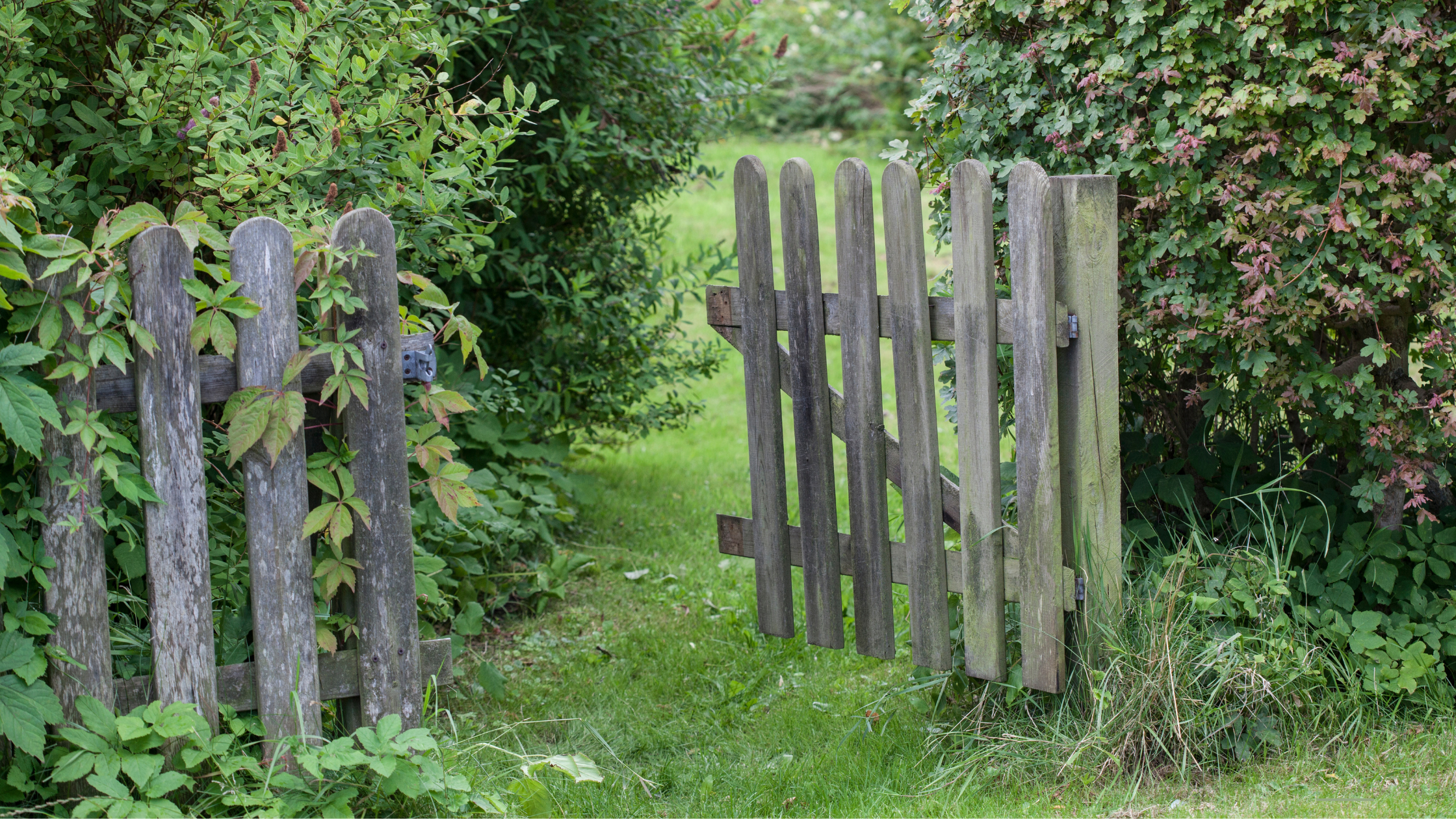
I want us to think for a moment about gates. We see gates, barriers, and doorways everywhere. And gates are never neutral. A gate always raises a question: Who gets to go through?
We live in an age that is deeply anxious about that question. Who is in and who is out? Who belongs and who does not? Throughout history, we have drawn lines around our neighborhoods, our nations, our communities, and sometimes even our congregations. And often, those lines have served as boundaries…boundaries that might be difficult for some to cross.
So, when Jesus stands up in the Gospel of John and says, “I am the gate,” we need to pause and listen carefully. Because he is not confirming our worst instincts, he is saying something radical and beautiful. He is turning the whole idea of a gate on its head.
The setting…the context of this Gospel story matters. You see, in the chapter right before this story, chapter nine, Jesus had healed a blind man, and the religious authorities, the self-appointed gatekeepers of that world, promptly threw the man out of the synagogue for daring to speak well of Jesus.
They used their power to exclude a vulnerable person from the community of God’s people. And now in chapter 10, Jesus turns to face them…and says, “Hey, you didn’t need to do that. You are misunderstanding God’s will. There is a different way.”
Then, Jesus draws on the image of a sheepfold. A sheepfold was a low stone enclosure common to the Palestinian hillside, where sheep were gathered at night for safety. Several flocks might share the same sheepfold, watched over by a single gatekeeper. In the morning, each shepherd would return and call their own sheep by name. The sheep would recognize their own shepherd’s voice. They would follow him to the pasture and no one else.
Into this picture, Jesus places himself, not as one more shepherd among many, but as the gate itself. “I am the gate for the sheep,” he says. And then he says it again. “I am the gate for the sheep.” He wants to make sure we hear it.
Now here is where we have to resist the temptation to hear this wrongly. When Jesus calls himself the gate, he is not security. He is not setting up some kind of a checkpoint. He is not saying, “Only the approved may enter, and I will be the one sorting them out.” No, Jesus says: “Whoever enters by me will be saved and will come in…and go out…and find pasture.” Come in. Go out. Find pasture. This is the language not of restriction but of freedom. Of movement. Of abundant life.
A gate, when you think about it, does two things. And both of them, when it is Jesus who is the gate, are acts of breathtaking love.
First, a gate opens. It opens wide to welcome.
The whole purpose of a gate in a sheepfold was not to imprison the sheep but to give them a safe passage in and a safe passage out, to make movement and life possible. Without the gate, there is only a wall. Without the gate, you are trapped inside or stranded outside, with no passage between. Jesus as the gate means there is always a way in. There is always an opening. No matter where you have been wandering, no matter what the other gatekeepers in your life have told you about your worth and your welcome, there is a gate, and it is open.
Think about who was listening to Jesus that day:
- People who had been scattered and cast out.
- People told they did not belong, told their suffering was their own fault.
- People who were told that God’s house had no room for them.
And Jesus says to each one of them: I am the gate. Come in. You are welcome. There is safety here.
This is the gospel in its purest and most joyful form: a gate, swung open wide, with the shepherd standing beside it, calling each one by name.
This story reminds us that the gate opens not because we’ve done anything to earn it…or to deserve it…but simply because the shepherd loves the sheep. God’s grace first…and then the joy of finding yourself inside, fed and sheltered and known. Grace…and then joy. Grace…and then joy. That is the order of things in the kingdom of God.
This is what our group experienced during our January trip to Tanzania to visit our partner ministry there. The gate was open wide. We were welcomed with open arms…we experienced their community, their love, and their hospitality. We experienced the grace of God. And then…then…all of the things we saw and did flowed from that. That is the joy of an open gate.
But remember, a gate also closes. And this too is an act of love, perhaps the more surprising one, but no less wonderful.
At night, when the shepherd had led the sheep safely into the fold, the gate was shut. Not to imprison them. Not to punish them. But to protect them. The world outside that gate held real dangers.
But here’s the important thing to know about this image Jesus uses: In most of the small, rural sheepfolds of first-century Palestine, there was no gate made of wood or iron. Instead, the shepherd himself would lie down across the opening of the fold, his own body becoming the gate. To enter the fold, a thief would literally have to step over the shepherd. To harm the flock, a predator would have to go through the shepherd first. The shepherd was not merely watching the gate. The shepherd was the gate, with his own body.
So do you see what Jesus is claiming here? When he says he is the gate? He is not describing a wooden mechanism. He is describing himself. He is the one who lies across the opening. He is the one who says: To get to these sheep, you’re going to have to come through me.
Dietrich Bonhoeffer, the Lutheran pastor and theologian, wrote that “we are in his hands and under the protection of him and his Father, and nothing can harm us.” That is the promise of the closed gate. The anxieties that drive us, the shame that silences us, the forces that would steal our joy and diminish our dignity, Jesus stands against all of it. The gate closes behind us, and we are protected from all of that.
Jesus says, “The thief comes only to steal and kill and destroy.” He is speaking of every voice, every system, every lie that treats human beings as expendable, that tells you your worth is conditional, that you must earn your place at the table of life. Those things do not get through the gate. Jesus does not allow it.
And that leads us to the heart of Jesus’ words today. He says, “I came that they may have life and have it abundantly.”
Abundance. For a flock of sheep, abundance is not complicated. It is enough to eat, fresh water to drink, a safe place to rest, and a shepherd who knows every one of them by name. That’s it! That’s all. And it is everything.
The same is true for us. Jesus is the gate. And you are the sheep. You enter through him. And in doing so, you are seen. You are known. You are called by name. You belong. You experience Christ’s abundance.
Friends, in a world that is constantly asking who belongs and who does not…who is “in” and who is “out,” Jesus answers with his very self. He makes himself the threshold, the passageway, the opening. And the gate is wide. And the gate is open. And the shepherd is calling.
Come in. Go out. Find the abundant grace of God. Repeat. Because Jesus…the open gate through which you experience grace…is here…and that means that you are safe…and that there is more than enough…for you.
Thanks be to God.
Amen.



Leave a Reply