
This is the sixth and final week of our sermon series on “Villains in the Bible,” and I want to begin with a question. Out of all the villains we’ve looked at this summer, which one do you think is the scariest?
- Is it the Serpent…the snake? Smooth and convincing?
- Or maybe it was Pharaoh, with his hardened heart?
- How about King David, who had everything and still reached for more?
- Or, perhaps Herod, whose insecurity turned violent?
- No, it must be the Devil himself, right? Whispering in the wilderness?
Well, for sure, these are all pretty scary villains. But the scariest one…I believe…it isn’t any of those. The scariest villain is the one we’re talking about today, and this villain doesn’t even have a name.
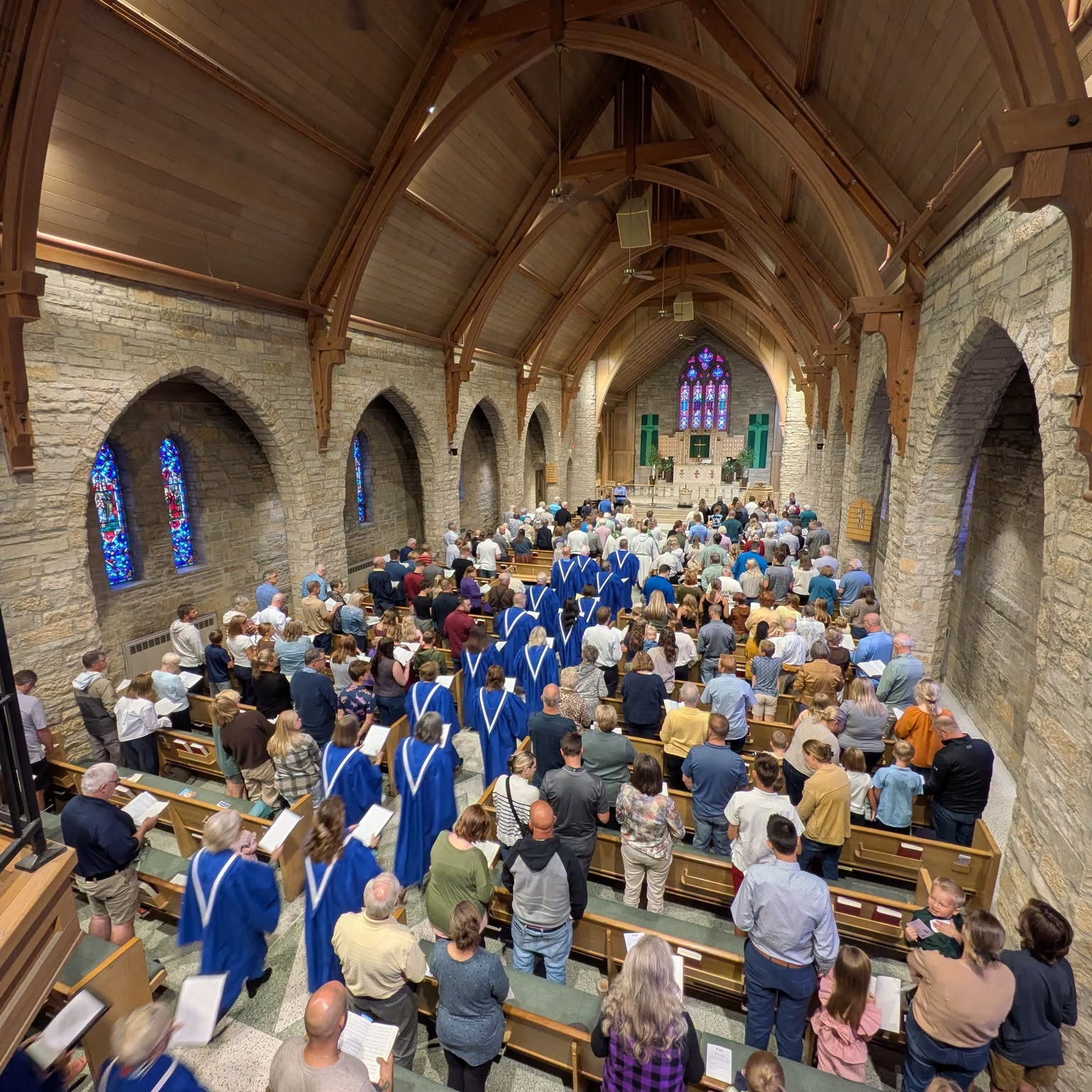
The scariest villain is the crowd.
I’ll be honest. I wanted this final villain to be someone else. Someone with a name and a face and a long criminal record, somebody I could point at and say, “Yeah, that guy, definitely not me.” That’s the comfortable way to do a villain series. You hold up the bad guy, shake your head, you say “well, at least I’m not like that one…” and you go home feeling good about yourself.
But today’s villain isn’t going to let us get away with that. Because it’s the crowd. The crowd isn’t a “him” or a “her.” The crowd…the crowd is an “us.” Which is exactly why it might be the most important villain for us to talk about…of all.
Ok…our story begins back in the book of Exodus.
Moses is up on the mountain. He’s been up there, sitting with God, for over a month. No phone, no texts, no “running a little late, be down soon.” Just radio silence. And down at the bottom of the mountain, the Jewish people, the ones he’s supposed to be leading? They’re getting anxious. Moses…the one who led them from Egypt to here…to the very middle of nowhere…is missing. Their God seems distant. And their patience is running thin.
So, they go to Moses’ brother, Aaron, second-in-command, and they say, “Make us a new god who will go before us…who will lead us…” Aaron, who apparently misplaced his spine somewhere back in Egypt, says, “Sure. Hand me all your jewelry.” They melt it all down and build a golden calf to worship. These same people who God rescued from slavery, who watched God split the Red Sea to provide safe passage, and who ate the bread that God gave them…literally from the sky, are now dancing around a cow made of earrings.
These are not stupid people. These are not wicked people. They are anxious people who stopped remembering what God had already done and reached for whatever felt solid in the moment. Once this crowd hit critical mass, nobody stopped to ask the obvious question: “Wait, what are we actually doing here?”
That’s nature of the crowd. Give the crowd enough anxiety, enough mass, and no guardrails, and it will build a golden calf and call it worship.
Ok, now we fast forward to the Gospel of John, chapter 19, and we meet the crowd at its worst.
Jesus has been arrested. And now he stands before Pilate, beaten and bleeding, wearing a crown made of thorns because somebody thought that was funny. Pilate says the words that should have ended this whole tragedy: “I find no basis for a charge against him.” Pilate, the one guy in the room with actual legal authority, says, three times in this story, “I’ve got nothing on this guy.”
The crowd doesn’t care.
“Crucify him,” they shout. Pilate offers them an exit ramp. He’ll release a prisoner, and they can choose: Jesus (innocent) or Barabbas (a known criminal) You’d think this would be the easiest decision in human history. The crowd picks Barabbas.
No one person was technically guilty of murder that day. And somehow, Jesus still ended up on a cross. That’s the terrifying math of the crowd. It doesn’t take a villain with a plan. It just takes ordinary people who go along with the crowd, stay quiet, and assume somebody else will deal with it.
Fast forward to today: most of us are never going to build a golden calf or shout for a crucifixion. But all of us have stood in a crowd, literal or otherwise, and stayed quiet when we probably should have said something. Going along with the crowd is so much easier than going first.
I think about Martin Niemöller, a German pastor who, in the early years of the Nazi rise to power, did what many people did. He went along with the crowd. He told himself it wasn’t his fight. And here’s the part that hits closest to home for us. Niemöller was a Lutheran pastor. For that matter, most of Germany was Lutheran.
When the Nazi party formed a movement inside the German church called the “German Christians,” a movement that tried to merge the cross with the swastika and push Jewish converts out of the pews, plenty of Lutheran pastors went right along with it. Some even called themselves the “storm troopers of Jesus Christ.” Which I find horrifying.
And many of those pastors who didn’t actively join this movement just kept their heads down and figured the church shouldn’t get political. Finally, a few of them said, “No, this is not who we are.” Niemöller eventually became one of them. But it took a long time, and it cost him seven years in concentration camps.
Out of that experience, he wrote words you’ve probably heard in some form.
Niemöller wrote: “First they came for the Communists, and I did not speak out, because I was not a Communist. Then they came for the trade unionists, and I did not speak out, because I was not a trade unionist. Then they came for the Jews, and I did not speak out, because I was not a Jew. Then they came for me, and there was no one left to speak for me.”
That’s the crowd, in hindsight, after it’s too late to do anything but write the warning down. This is a hard thing for those of us who claim the identity of Lutheran to swallow: that our own religious tradition was complicit in these horrific acts. But it is worth remembering, not so we can wallow in shame about people who lived a century ago, but so we take seriously how easily good church people, people like us, can talk themselves into going along with the crowd. It is worth remembering, so that we never let it happen again.
So here we are. The scariest villain in this sermon series has the lowest bar for entry. You don’t need David’s ambition or Herod’s paranoia to join this crowd. You simply need to be quiet at the right moment…or the wrong one.
Here’s the thing: The crowd still lives and exists today. There are still moments when the crowd does or says things it shouldn’t…or doesn’t do or say things it should. There are still moments when we can find ourselves complicit because of our inaction…because we don’t want to take the risk. There are still moments:
- Moments when everyone’s piling on someone who isn’t in the room.
- Moments at a family gathering when it’s easier to let an unkind comment slide than make things awkward.
- Moments when you witness something bigger, an injustice that’s easy to scroll past because naming it might cost you something.
You don’t have to organize a movement. You have to be the one who stops and asks the question the crowd never asks: “What are we actually doing here, and who’s getting hurt by it?”
So here is the good news, and just like every other week in this sermon series, I promise that there is good news.
Look at who was in that crowd in Pilate’sgrace, courtyard.
- Some of those same Jerusalem residents are the same people Peter preaches to fifty days later at Pentecost.
- The very city that chanted “crucify him” becomes the city where three thousand people are added to the church in a single afternoon.
You see, God doesn’t throw the crowd away and start over with braver people. No, the Holy Spirit shows up in the middle of that same anxious, easily swayed, occasionally cowardly crowd…and turns it into something else entirely. The Spirit forms it into a community. Into church. Into…well…us.
Six weeks of villains, and we slowly realize that we have more in common with each of them than we’d like to admit.
- The Serpent’s half-truths.
- Pharaoh’s tight grip.
- David’s hunger for more.
- Herod’s fear dressed up as power.
- The Devil’s whisper that we’re not enough.
- And now the crowd’s quiet, convenient silence.
And every week…every single week…the same God who holds up that mirror…so we can see ourselves in these stories…is the same God who comes looking for you…who seeks you out.
- God ran toward David before he confessed a thing.
- God gave the crowd who worshipped the golden calf the law as a gift, as guardrails…as a safety net.
- And God ran toward the very crowd that chose Barabbas, and turned cowards into preachers.
God does not wait for the crowd to deserve grace. God who walks into the middle of the crowd, finds you hiding there, and calls you out, by name, into something braver.
You are going to find yourself in a crowd again. Maybe today. Maybe tomorrow…maybe next week or next year. The question won’t be whether the crowd shows up. It always does. The question is whether you’ll be the one who stops, who notices, who asks out loud what the crowd never wants asked. “What are we doing here? Does what we’re doing reflect the love that Jesus has given to us?”
You don’t have to be a hero. You simply have to be one who asks the question. And because of Jesus, you can be the one, who makes the difference.
Thanks be to God, who meets us in the crowd and calls us out of it.
Amen.



Leave a Reply