
Grace and peace to you from God our Father and from our Lord and Savior Jesus Christ, to whom you belong. Amen.
A friend of mine up in the Twin Cities once told me about his attempt to join a local pickleball league. (Anybody here ever play Pickleball?). He had seen the game, thought it looked fun, and said to himself, “I think I can do that!” So he showed up with some brand-new shoes, a shiny, brand-new paddle, and absolutely no idea how to play. Within five minutes he had hit the ball over the fence, tripped over his own feet, and smacked a bystander right in the middle of the forehead with the ball. At one point his partner yelled some advice: “Just dink it into the kitchen!” and my friend shouted back, “What’s a dink?!? And where’s the kitchen?”
He was clueless. And he was ready to give up. But instead of laughing him off the court, the rest of the group surrounded him, gave him pointers, and cheered every time he connected with the ball. By the end of the night, he felt like part of the team. He said he felt like he belonged.
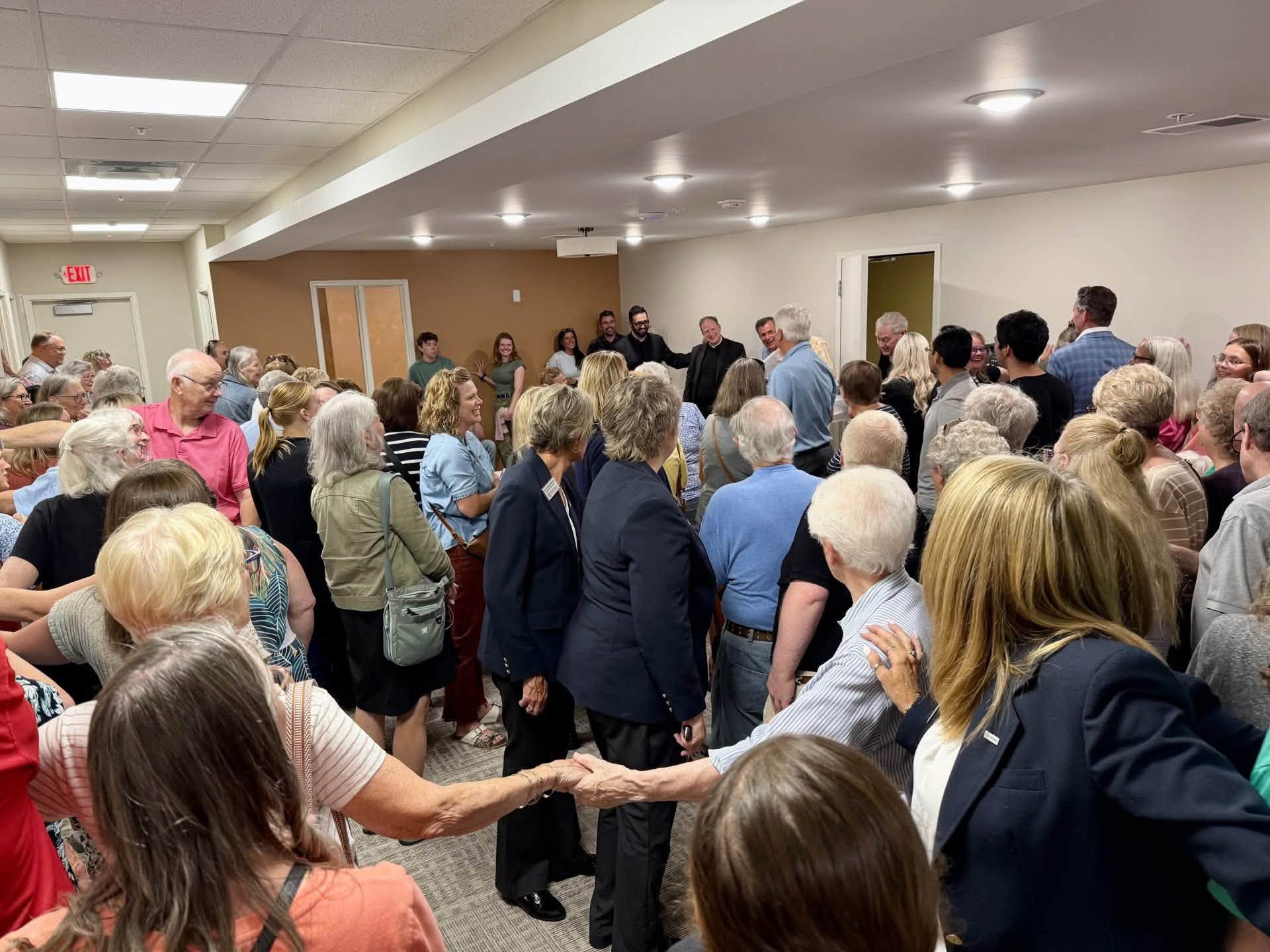
That is the power of belonging. It is not about being perfect or even knowing what you are doing. It is about being welcomed, encouraged, and loved into community.
In the world today, doesn’t it feel like it’s gotten harder, and harder, to live together in community? Sometimes, it feels like we are all in this game…and the rules keep changing…and no one is telling us what’s going on… and we don’t know what to do. One day, society seems to be humming along….things are going pretty good…and the next day, something happens…everything shifts, and we are left wondering what to do…or to say…or not say.
Turn on the news and it is conflict after conflict: wars, violence, school shootings, political fighting, and division. It feels endless. And eventually, we get tired. Tired of the arguments, tired of the noise, tired of those we see as being on “the other side.” Some days it feels like the world around us is unraveling. It is exhausting. (Anybody else feel exhausted?)
And, deep in our hearts, we know it’s not supposed to be this way.
There is a word that helps us when we feel these things. It is a word that reminds who…and whose…we are. And it helps us remember how the world is supposed to be. It is a word that centers us. That word is belong.
We belong to many things.
- We belong to gyms.
- We belong to professional associations.
- We belong to unions.
- We belong to 4-H, scouting, bands, and choirs.
- We belong to sports teams and to clubs.
We love to belong. Belonging, in fact, is wired into us…it’s literally in our DNA. From the earliest days of humanity…when people would cling together for protection…for food…for safety. And today, still, we have this instinctive want…no, a need…a need to know that we belong; that there is a place for us.
This kind of belonging, by the way, is good. It still gives security and safety; it gives us joy and support. And in a world that can feel so broken, this becomes really important.
But the kind of belonging that Jesus is talking about…the kind we find in the scriptures today, goes even one step further. Let me frame it as a question: When does belonging bring healing…healing to our hearts, our relationships, and our very spirits? When does belonging actually transform lives?
The answer: belonging does these things when it is rooted in love. Not affection, but love. The love of God and the love that we show to one another.
Today, we continue our sermon series on belonging. Last week Pastor Chris reminded us that the invitation of belonging is for everyone; no limits. Today…we look at why belonging matters for us as followers of Jesus.
Both of our scripture readings today remind us that love is the soil in which Christian community is planted. Without love, nothing grows. With love, we flourish. With love, we belong…deeply.
1st John says, “Beloved, let us love one another, because love is from God.” And later: “God is love.”
Martin Luther once wrote that “…faith is a daring confidence in God’s grace, so certain that one would stake their life on it a thousand times.” That faith clings to God. But love is what extends to our neighbor.
This scripture from 1st John does not say love is optional, like something we can do when we have some extra time. It says that if we know God, we love. It’s that simple. And it goes on to say that if we do not love, we do not know God. Now, that’s blunt, but it is also freeing. It means that our community…our church is not defined by programs or buildings, but by love.
Of course, love here is not about warm fuzzies. This is not a Hallmark movie. Love in the scriptures means action. It means setting aside our own agendas…our own wants…in favor of something greater. It means patience when you would rather snap…forgiveness when you could hold a grudge…compassion when it would be easier to judge…or to walk away.
I did a wedding once, where the couple wrote their own vows. When it was the groom’s turn, to make his promises, one of the things he’d added in was: “I promise…I’ll always let you have the remote.” Everyone laughed, but you know what? There is truth there. Love is often about these little things. The small, daily gestures. Giving up the remote, the last cookie, or your turn to talk for the sake of another.
Dietrich Bonhoeffer said in his book, Life Together: “The person who loves their dream of community will destroy community, but the person who loves those around them will create community.” Hear that last part again: The person who loves those around them will create community. Love is not about the perfect picture of church or family. Love is about real people who disagree with each other…who frustrate each other…who test each other’s patience…and then love each other anyway.
In John 15, Jesus says, “I am the vine, you are the branches. Those who abide in me and I in them bear much fruit.” Fruit is the visible sign of inner health, and the fruit Jesus always points to is love.
A branch cut from the vine withers. But connected, it produces grapes. In the same way, when we remain rooted in Christ and connected to each other, love grows in us: and not just love. Also, joy, peace, patience, kindness, generosity, faithfulness, gentleness, and self-control.
But fruit does not appear without some occasional pruning. God sometimes cuts away old habits, resentments, or selfishness so that love can grow. Pruning is uncomfortable…it can be hard, but it leads to life.
So how do we live this way? How do we live as if our belonging is rooted in love? What does that fruit look like?
- At home: Love is patience when family members are late. Love is forgiveness when your teenager puts a ding in your car door. Love is compassion when your spouse has a bad day.
- At work: Love is giving coworkers the benefit of the doubt. Love is showing up even when you will not get the credit. Love is resisting the temptation to hit “reply-all” with the sarcastic comment.
- In the neighborhood: Love is mowing your neighbor’s lawn after they’ve had surgery. Love is listening to the person whose yard sign makes you cringe. Love is noticing the stranger who needs kindness.
- And in the world: Love is leading with compassion for those in need. It is resisting the urge to make someone you disagree with, “the other,” or even, “the enemy.” Love is caring. It is listening. It is remaining centered on our faith in Christ, which draws us together, instead of those things that tear us apart. It is remembering that to live this way is to reflect Christ, who loved us…even when we were unlovable.
1st John says, “Perfect love casts out fear.” The world is driven by fear. But God’s perfect love is the opposite…it drives out fear.
A pastor friend told me about a conflict over the budget that boiled over at his congregation’s annual meeting. Voices rose; people took sides. He said he could see the fracture forming right there in front of him. Finally, when things were getting really heated, one older member stood and said, “Friends, we are forgetting something. We are family. Families argue, but families also love. We all belong here. Let’s remember why.” Like the air being let out of a balloon, the tension eased, and the meeting moved forward. That is love in action.
When we know we are loved, we can risk loving others. We do not have to guard ourselves so tightly. We do not have to win every argument or always be right. We can be patient, generous, forgiving, because God’s love makes us secure. God’s love reminds us that we belong and that nothing is going to change that.
Friends, to belong is to be rooted in love. It is when you sink your roots so deeply into God’s grace that your life can’t help but bear fruit in patience, forgiveness, and compassion. To belong to God…to belong to each other …is to reflect Christ’s love in your family, your workplace, your neighborhood, and even with those who frustrate you.
This is not easy. But it is possible, because God first loved you. You love because God first loved you. That love took on flesh in Jesus Christ. That love lives within you through the Spirit. And that love is what binds us all together as the church, even though we all have different interests…different opinions…different gifts…different politics…different passions.
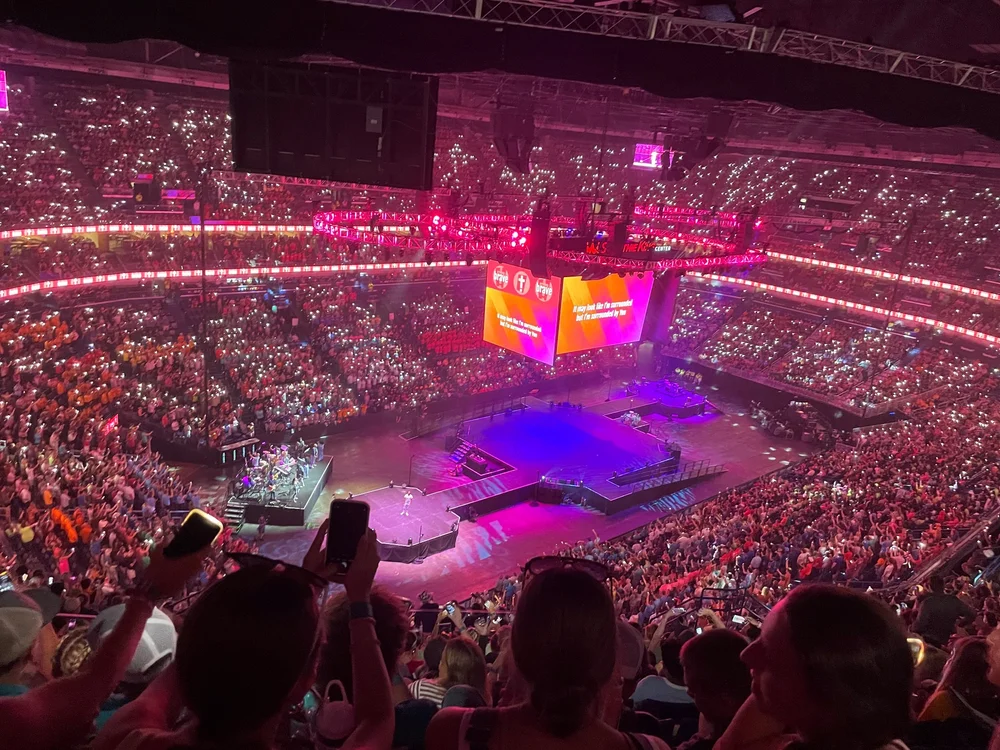
You belong. You belong here. And because of that, we love each other. Together, we stay connected to the vine. And together, we will bear the fruit of compassion and forgiveness. And when we stumble, we remember Martin Luther’s words: “This life therefore is not righteousness, but growth in righteousness. It is not health, but healing. It is not being, but becoming.”
And in all of it, the soil in which God has planted us is love; the soil in which we belong…is love.
Through Jesus’ love, you belong to God. And you belong here. For that, thanks be to God.
Amen.


Leave a Reply